Long-Term Care


What Is Long-Term Care?
Long-term care (LTC) is assistance provided to you when you are no longer able to do some of the basic activities of daily living, whether you are living at home or in a senior community, such as:
- Walking, or otherwise getting around the home or outside. The technical term for this is “ambulating.”
- Feeding, as in being able to get food from a plate into your mouth.
- Dressing and grooming, as in selecting clothes, putting them on, and adequately managing your personal appearance.
- Toileting, which means getting to and from the toilet, using it appropriately, and cleaning yourself.
- Bathing, which means washing your face and body in the bath or shower.
- Transferring, which means being able to move from one body position to another. This includes being able to move from a bed to a chair, or into a wheelchair. This can also include the ability to stand up from a bed or chair in order to grasp a walker or other assistive device.
Long-term care is generally non-medical in nature, and once commenced is likely to continue for the rest of your life, because it is needed as a result of your aging condition, and not the result of a short-term injury or illness.
Client Stories: Dave
Dave is in his early 60s and lives at home. He has a few health problems that he’s been able to manage through his insurance provider, but he hasn’t given much thought to his long-term care needs. He mistakenly assumed that Medicare would pay for all care he might need as he ages, but a friend recently told him that is NOT true and recommended he talk to an elder law attorney. He’s never met with anyone to discuss his options. Now is the time for Dave to take steps that will ensure his long-term care needs will be met and protect his assets into the future.
How Widlast Legal Can Help
At Widlast Legal, we meet with clients like Dave frequently. Just like Dave, many people do not realize that Medicare, standard health insurance, and disability coverage do not cover the costs of long-term care. This makes it crucial to speak with an experienced elder law attorney who can help you assess your current and future needs, as well as help you determine how you can pay for your care. By planning for long-term care, you put yourself in position to ensure that you will get the care you deserve as you age.
If you are not sure what the difference is between medical care and long-term care, then take some time to learn about the levels of long-term care. It’s best to begin planning as soon as possible, as some options are only available to people who plan ahead before they actually need any type of long-term care. In turn, you can secure a higher quality of life for yourself and be certain that your financial assets will stretch to cover your care needs.
Don’t wait until tomorrow to plan. Contact an elder law attorney at Widlast Legal, and let us help you secure the peace of mind you deserve.
LTC at Home
You may be happy living at home but there may come a time when you may decide that you could benefit from in-home assistance. Such assistants could begin by providing companionship, transportation, meal preparation, light housekeeping and doing laundry. In-Home caregivers can also provide you with “non-medical” personal care to help keep you safe and in performing the basic activities of daily living, including medication reminders, dressing, bathing, grooming, toileting, transferring (ex: moving from chair to bed), supervision due to dementia, and incontinence care.
If you decide that you would like the help of in-home care, we recommend that you only hire caregivers through a licensed home care agency, and that you only pay the agency, not the caregivers directly, for a multitude of reasons we can explain during our initial consultation with you, including but not limited to: background checks, continuity for your care in the event of a caregiver’s absence, worker’s compensation and general liability insurance, employment relationships, and the complexity of overtime pay laws protecting caregivers in California.
There are litigation attorneys circling among the caregiver crowds, informing them of their rights and ability to sue elders like yourself, or the family or estate of a deceased elder they care for, sometimes winning awards that are considerably more at that point than the cost would have been to ensure they were paid properly in the first place. If you have already hired in-home caregivers directly, it’s not too late. Contact an elder law attorney at Widlast Legal to help protect you and your loved ones.
LTC Communities
While your plan for aging may be to stay living at home as long as possible, we encourage you to become familiar with your options for long-term care in a community setting, outside of your home. This will help you feel confident that you have a plan in place in the event of an unanticipated crisis, or if living at home becomes too difficult or too expensive at some point.
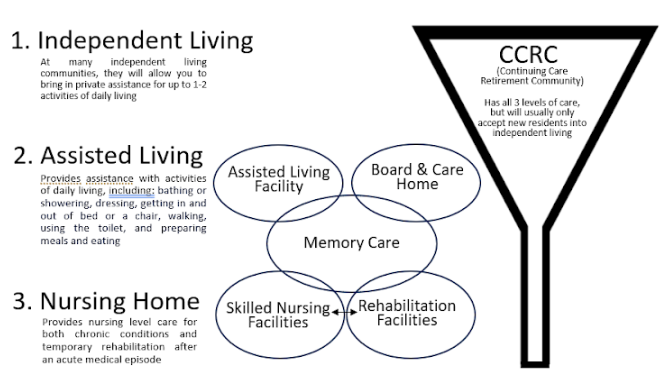
Generally, there are 3 levels of care available from senior living communities:
- Independent Living,
- Assisted Living, and
- Skilled Nursing
Below is a graphic showing the three levels of care, with examples of types of living communities for them, and the level of care available.
If you qualify to live at an independent living, assisted living facility or a board and care home, then we can help you find one that is able to handle your level of care needs, is a good fit financially, and has availability for new residents. If you would like to learn more about planning for long-term care, contact an elder law attorney at Widlast Legal today.

Schedule a Consultation